On Monday, November 2, I spoke at Scopism’s Service North 2026 conference in Manchester on a question that runs through almost every complex IT procurement: are we negotiating or are we integrating?
Thank you to Claire Agutter and the Scopism team for the invitation, and to everyone who joined the after-lunch session. The talk builds on the Service North 2025 session by my colleague Matt Reprogle. As Scopism’s Americas partner, Integris Applied was glad to be back in Manchester.
The relationship starts before the contract is signed
A managed services procurement does more than qualify, select, and negotiate a solution, supplier, and price. It also begins a contractual relationship that may last many years, where both the customer organization and the supplying firm are each trying to meet their own goals by meeting the program goals.
In a Service Integration and Management (SIAM) environment, multiple parties have to work toward the same goals. An analogy I often use is a group of people rowing together in a boat. If one person drops an oar, the others can’t just say their own oar is fine and it isn’t their problem. The procurement is where the attitude of collaboration has to start.
I opened the talk with a story of my first major negotiation, more than 20 years ago for a $250M/year program. Lawyers and finance teams negotiated terms and price upstairs; I was downstairs to lead a large room of primarily IT people, supported by lawyers, for the solution negotiation workstream. As we settled into our seats for the first day of what might be 4–6 weeks of negotiations, I looked around and saw formality – dark suits, furrowed brows, intense and anxious faces staring at me for direction.
Somewhat off-the-cuff, I made some introductory statements by saying that upstairs they were really negotiating – but in our room, downstairs – we were just a group of IT people, trying to figure out how to make the solution work. Within a few days, and certainly into the second week, it really did feel like we were simply practitioners with sleeves rolled up, working together to sort out solution elements and transition plans. What I came to learn in that experience was that all negotiations (whether finance, legal terms, or solution) can and should be handled that way.
Every interaction in a procurement shapes the relationship. In many government and large enterprise processes, there is a sequential series of steps. “Negotiations” appears as a distinct, named, and final step before contract signing. In practice, because effective and ideal negotiations are about understanding underlying interests and finding ways to align and meet goals, really all interactions across the procurement timeline can be thought of as “negotiations”.
In the Manchester talk, I started with the collaborative mindset, then moved to the practical side: how specific procurement stages work, with Do and Do Not practices for Clarification/Oral Sessions, Due Diligence, and Integration Sessions.
I closed the session where I began:
“Are we integrating or are we negotiating? Are we trying to build an effective marriage relationship, or are we trying to interrogate and test the other provider to figure out if they’re suitable for us?”
Somehow we’re doing both. But when you are leading through a procurement or negotiation process – whether on buy-side or sell-side – treat it as an opportunity to build a healthy, collaborative relationship.
Takeaways
- Treat procurement as the start of the relationship, not only the path to a signature.
- Lead with outcomes and interests, not just specifications and positions.
- Use typical procurement steps (such as Clarification Sessions, Due Diligence, and Integration Sessions) not only to address the procurement and contract goals, but also to set the attitude that this is relationship-building toward a long-term and mutually beneficial service relationship.
Related
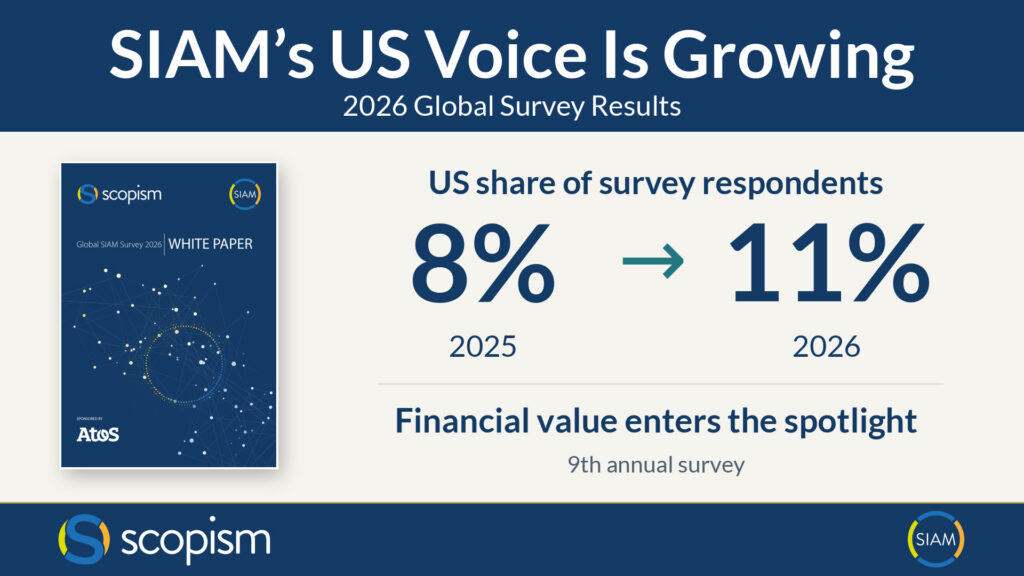
- 2026 Global SIAM Survey Results: Integris Applied Highlights Growing US Participation and Financial Focus in Global SIAM Survey
- Matt Reprogle’s Service North talk from 2025: Integris Applied Contributes to the 2025 SIAM Body of Knowledge, Speaks at Service North Conference
Tim is an accomplished leader and advisor with a blend of expertise in IT operations, contracting, and finance.
View profile →More articles by Tim →Share this article